





Photo: Collected
The largest markets for nonwovens continue to be absorbent hygiene products, wipes and medical materials, but many of the most intriguing developments showcased at INDEX™26 were aimed at far smaller, highly specialised applications where performance, rather than production volume, is the defining requirement.
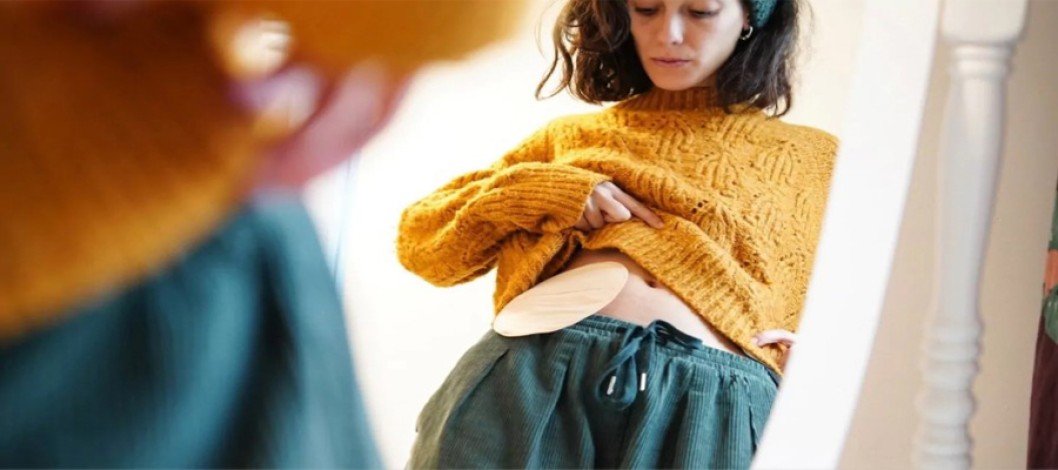
Two exhibitors in particular demonstrated how established nonwoven technologies are being adapted to solve problems that conventional materials struggle to address. Germany’s Norafin is extending the operating limits of nonwoven filter media into environments exceeding 500°C, while PFAS-free activated carbon filter media for ostomy pouches are among the latest products from Nonwovenn, addressing the medical sector’s increasing need for safer, compliant and more sustainable materials.
Both companies illustrate how specialist expertise is creating new opportunities in high-value niche markets.
Beyond conventional filtration
Sintered nonwoven filter media capable of operating in temperatures above 500°C are the latest development from Norafin, headquartered in Mildenau, Germany.
In hot gas filtration, special materials are required for processes involving extreme temperatures or where filter media are subjected to significant mechanical or chemical stress. These demanding applications have traditionally relied on metal or ceramic filters, which provide the necessary thermal resistance but are inherently heavy, rigid and difficult to process into complex geometries.
“Regular polymeric fibres employed in the filter industry lose their operational ability at specific temperatures,” explains Tobias Thiem, product manager for Norafin’s Filtration business division. “Polyester peaks at 150°C, PPS/meta-aramids at 190°C, polyamide at 240°C and glass/PTFE combinations at 280°C.”
Norafin’s alternative combines the flexibility and lightweight characteristics of nonwovens with the thermal resistance of metals or ceramics. The filter media are produced by impregnating polymeric spunlaced nonwovens with a slurry containing metallic or ceramic particles dispersed in a solvent and stabilised with additives. During the subsequent sintering process, the particles bond both to each other and to the original nonwoven structure through organic binders. This creates a lightweight filter media capable of withstanding temperatures well beyond the limits of conventional polymer-based materials while remaining flexible enough to be pleated – significantly increasing the available filtration surface area.
“Control of the weight, density and particle size in the slurry is important and our adjustments have led to perfect results with an A1316L steel powder,” says Tobias Thiem. “The melt level settings in the oven are critical in achieving good shaping of the fibres to ensure performance. We are also able to produce these materials in 3D shapes for specific applications.”
Spunlace benefits
With annual sales of €52 million in 2025, Norafin continues to expand the capabilities of spunlace technology at its manufacturing plants in Mildenau, Germany, and Mills River, North Carolina, USA.
“Spunlacing enables the production of multilayer or gradient structures and the integration of support layers without damaging them, while gently processing a wide variety of fibres,” says Tobias Thiem. “The technology can be used to create structures from 20-600gsm and for filter media in particular, can provide high efficiency with lower weight, the porosity required for depth filtration and the incorporation of fine fibre surface layers.”
Multiple nonwoven and scrim layers with different performance characteristics can also be combined in a single production step without adhesives, while the company’s expertise extends to heavier needlepunched materials for demanding industrial applications.
“We work with an extensive array of high-performance fibres, and we know where the niches for our materials are,” Tobias Thiem concludes.
You can learn about South Asia's
largest exhibition on this topic through this link: https://nonwovenexpo.com/



Comment Now